Stretch Marks in Pregnancy: Can They Be Prevented and Do They Fade?
Key message: Stretch marks are common, harmless scars caused by skin stretching and hormonal change. They usually fade…
Key message: Stretch marks are common, harmless scars caused by skin stretching and hormonal change. They usually fade after birth but may not disappear completely, and no cream can reliably guarantee prevention.
Get urgent help: Stretch marks themselves are not dangerous. Seek assessment if itching is intense or widespread, especially on the palms or soles, or if there is a new blistering, painful or rapidly spreading rash, fever, swelling or breathing difficulty.
What do stretch marks look like?
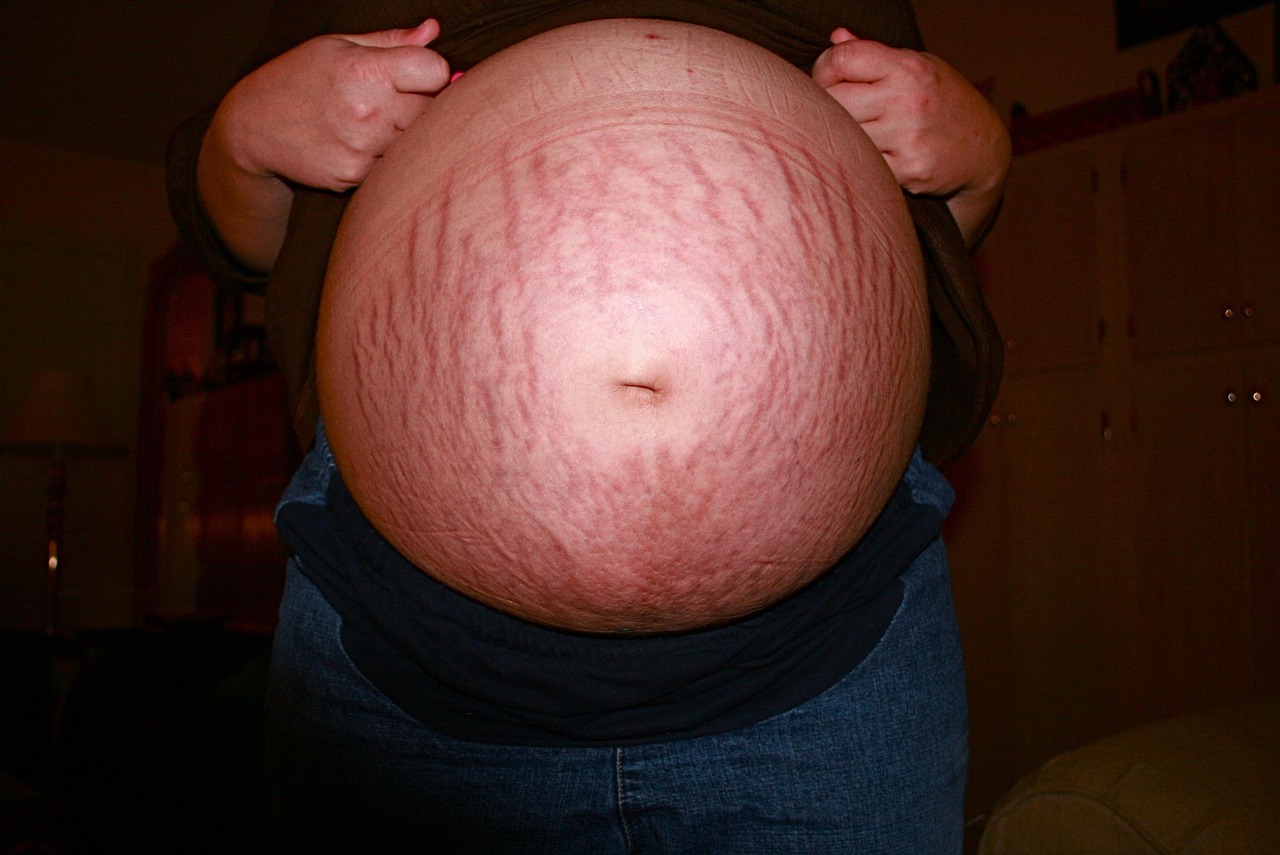
They often appear on the abdomen, breasts, thighs, hips or buttocks as pink, red, purple, brown or darker lines, depending on skin tone. They may itch when first forming and later become paler.
They are scars within the deeper skin and do not harm the pregnancy or baby.
Why do some people develop them?
- Rapid skin stretching as the uterus, breasts or body size change.
- Pregnancy hormones and inherited skin characteristics.
- A family tendency to stretch marks.
- Greater or faster weight change, although marks can occur at any body size.
- Previous stretch marks during puberty or another pregnancy.
Can they be prevented?
There is little good evidence that oils, cocoa butter, vitamin E or expensive anti-stretch-mark products prevent them. Regular moisturiser may reduce dryness and itching but should not be sold as a guarantee.
Gradual pregnancy weight gain within an individual healthy plan may reduce sudden stretching, but marks can still occur despite excellent care.
What skin care is safe during pregnancy?
- Use a fragrance-free moisturiser for comfort and apply gently rather than rubbing hard.
- Avoid products that irritate or cause allergy.
- Do not use topical retinoids such as tretinoin during pregnancy.
- Check strong cosmetic ingredients, herbal mixtures and bleaching products with a clinician or pharmacist.
- Use sun protection because tanning can make colour contrast more noticeable.
What happens after birth?
Stretch marks usually fade gradually over months into lighter or silvery lines but often remain visible. The degree of fading varies between people.
Allow time for normal skin and weight changes before deciding whether cosmetic treatment is worthwhile.
Which treatments may improve appearance later?
- Dermatology assessment can discuss laser, microneedling or selected prescription creams.
- Results are variable and improvement rather than complete removal is the realistic goal.
- Treatment choice depends on skin tone, scar age, breastfeeding, cost and risk of pigmentation.
- Retinoid creams require medical advice and are avoided during pregnancy; breastfeeding use also needs individual review.
When might the itch be from something else?
A widespread itch without a primary rash, especially on palms or soles, may need bile-acid and liver tests for intrahepatic cholestasis. A very inflamed or blistering rash may represent another pregnancy skin condition.
Do not assume every itchy line or rash is a stretch mark.
Frequently asked questions
Will drinking more water prevent stretch marks?
Hydration supports general health but has not been shown to prevent stretch marks.
Does a certain oil work best?
No product has strong evidence of reliable prevention; use a simple moisturiser for comfort.
Do stretch marks mean I gained too much weight?
No. They can occur at any healthy weight and are influenced by genetics and hormones.
Will they disappear completely?
They usually fade but often remain as lighter scars.
Can I treat them during pregnancy?
Comfort-focused moisturising is reasonable; stronger cosmetic treatments are generally considered after pregnancy.
Your next step
Mention a new severe itch or unusual rash to the maternity team rather than self-treating it as stretch marks. Cosmetic treatment can be discussed after pregnancy with realistic expectations.
Medical and content review: Dr Mohamed Abdelghany, Obstetrics & Gynecology Specialist, MRCOG (UK), MSc Obstetrics & Gynecology – Kasr Al-Ainy, Cairo University.
Last reviewed: 23 August 2026.
This information is for general education and does not replace individual medical assessment. Severe, sudden or concerning symptoms should not wait for a routine appointment.