

Your First Antenatal Visit: When to Book and What to Expect
Patient information illustration — not a diagnostic image. Start antenatal care early; aim to complete the first structured…

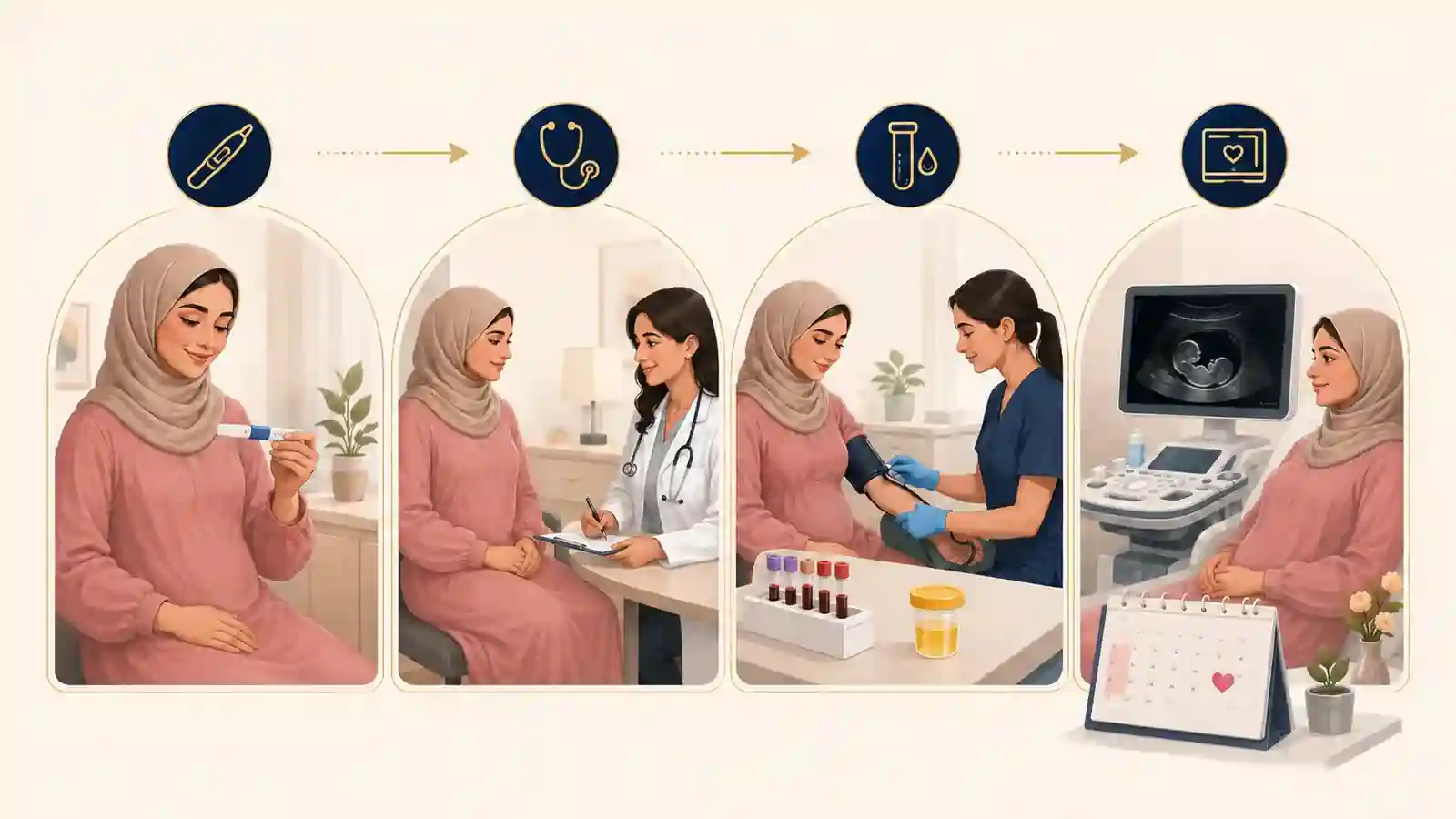
Start antenatal care early; aim to complete the first structured booking visit by 10 weeks so risks can be identified and care personalised.
Your first antenatal visit is more than confirmation of pregnancy. It begins a care plan based on gestation, symptoms, medical history, previous pregnancies and current medicines. Do not wait for a problem before starting care.
When should I book?
Contact the clinic as soon as pregnancy is confirmed. The exact appointment date depends on gestation and symptoms, but antenatal care should start in the first trimester and the structured booking visit should ideally be completed by 10 weeks where possible. If you are already beyond 10 weeks, arrange care as soon as you can.
Earlier assessment may be needed for bleeding or pain, a previous ectopic pregnancy, recurrent pregnancy loss, assisted conception, a long-term condition or regular medicine that needs review.
What will be reviewed?
We review the first day of your last period, previous pregnancies and births, operations, allergies, long-term conditions, medicines, supplements and relevant family history. We also discuss mental wellbeing and support, nutrition, folic acid, smoking or smoke exposure, and anything else that may affect pregnancy.
- The first day of your last menstrual period, if known, and whether cycles are regular.
- Pregnancy-test results and any previous blood tests or scans.
- A complete list of medicines, supplements and doses; do not stop prescribed medicine on your own.
- Reports from previous pregnancy complications, operations or long-term conditions.
The assessment may include blood pressure, weight and urine testing, together with an individual risk assessment for additional care.
Which tests and scans may be offered?
Tests are tailored to you and local protocols. They may include a full blood count, blood group, Rh status and antibody screen, urine testing, and appropriate infection screening such as HIV, hepatitis B and syphilis. Blood glucose, thyroid tests or screening for inherited blood disorders may be added when clinically indicated.
Not everyone needs an ultrasound immediately after a positive pregnancy test. Timing depends on gestation, symptoms and history. Very early scans may not yet show every expected structure, so a planned repeat scan can be more accurate than an early conclusion. The dating and first-trimester scan is then arranged at the appropriate time, commonly between 11 and 14 weeks, according to your circumstances and screening choices.
What happens next?
You should leave with a clear plan for supplements, tests, the next appointment, first-trimester screening options and their timing, plus safety-net advice. Higher-risk pregnancies need additional monitoring tailored to the reason rather than a one-size-fits-all schedule.
Frequently asked questions
Do I need a scan as soon as the test is positive?
Not always. An early scan is important when symptoms or risk factors are present, but sometimes the pregnancy is too early for clear findings and the scan needs to be repeated.
Should I stop my regular medicine before the visit?
Do not stop prescribed medicine without advice. Contact your clinician early so safety, dose changes and suitable alternatives can be reviewed.
Does everyone follow the same visit schedule?
No. There is a general framework, but visit frequency and testing change with risk factors, findings and the needs of each pregnancy.